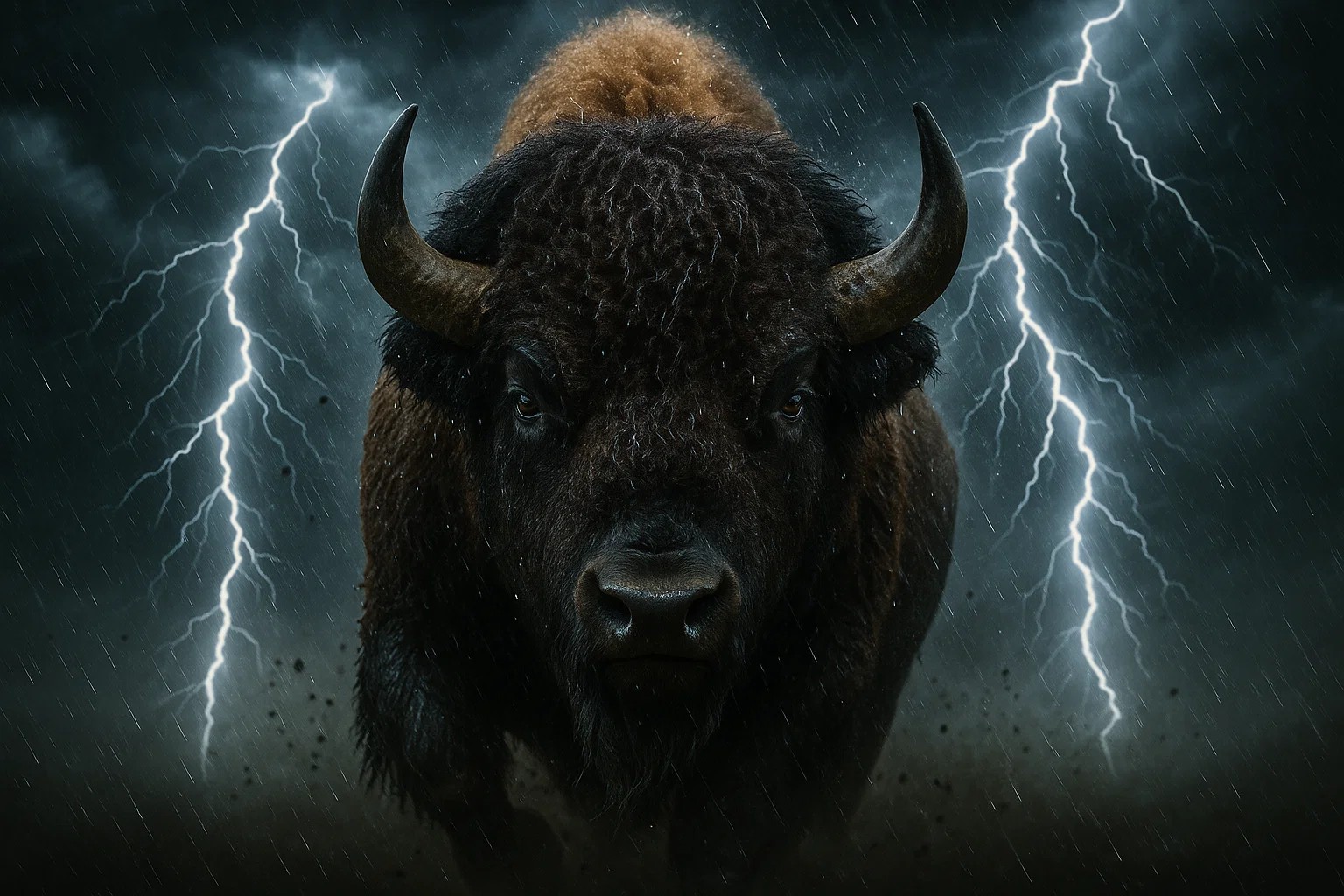
There's a remarkable difference between how cattle and buffalo respond to storms on the Great Plains.
When dark clouds gather on the horizon and lightning begins to crack, cattle do what seems most logical - they run away from the approaching storm. But here's the problem: storms move faster than cattle can run. So these animals end up prolonging their misery, staying cold, wet, and miserable for as long as the storm takes to pass over them.
Buffalo, on the other hand, do something counterintuitive. They turn and charge directly into the storm.
By running toward what frightens them, buffalo minimize their time in discomfort. They push through to the other side faster, enduring the worst of it head-on but getting through it quicker than if they had tried to flee.
It's a simple lesson written in instinct and survival: the fastest way out is through.
The Storms We Face in Life
We all encounter our own storms: difficult conversations with the people we love, health issues we're afraid to acknowledge, financial realities we've been ignoring, relationships that are slowly dying, dreams we're too scared to pursue, or truths about ourselves we don't want to face.
The storm might be calling your aging parent to have that hard conversation about their future care. It might be finally scheduling that doctor's appointment you've been putting off. It might be admitting your marriage needs help, or that you need help. It might be leaving a situation that's draining your soul, or committing fully to something that terrifies you.
And like cattle, our instinct is often to run. We procrastinate. We distract ourselves. We numb out with Netflix, social media, busyness, or substances. We tell ourselves we'll deal with it "when things calm down" or "after the holidays" or "when I feel stronger."
But just like those cattle on the plains, running from our challenges often means we stay uncomfortable longer. The difficult conversation becomes a silent chasm in our most important relationship. The health concern grows into a crisis. The financial problem compounds with interest - literally and figuratively. The unhappiness that could have been addressed becomes a persistent ache that colors everything.
We spend months, sometimes years, in the storm we could have passed through in weeks.
What Running Into the Storm Looks Like
Running into your storm doesn't mean being reckless or unprepared. The buffalo isn't stupid - it's strategic. It knows that the fastest path to clear skies is straight through. It doesn't deny the storm's power; it respects it enough to face it directly.
In practice, this means:
Having the conversation you're dreading. That talk with your partner about where the relationship is really going. The honest discussion with your teenager who's pulling away. The boundary you need to set with your parent or sibling. Yes, it might be painful. Yes, there might be tears or anger or uncomfortable silence. But thirty minutes of honest discomfort beats thirty months of growing distance and unsaid words.
Facing your health honestly. Scheduling that screening. Going to therapy. Actually addressing that persistent pain instead of explaining it away. Getting honest about your drinking, your eating, your stress level. Your body is already in the storm - pretending otherwise just keeps you there longer.
Getting real about money. Opening those bills. Looking at your bank account. Having the budget conversation. Admitting you need financial help or advice. The numbers aren't going to get better by being ignored, but they might get better by being faced.
Pursuing the thing that scares you. Going back to school. Starting that business. Writing that book. Having the courage to try for what you really want instead of settling for what feels safe. Rejection might hurt, but regret hurts longer.
Ending what needs to end. That friendship that's become toxic. The job that's crushing your spirit. The pattern you keep repeating. Sometimes running into the storm means having the courage to walk away from what's familiar but harmful.
Beginning what needs to begin. Committing to the relationship instead of keeping one foot out the door. Starting the recovery process. Signing up for the thing you've been circling around for years. Sometimes the storm is the leap itself.
Asking for help. Admitting to your partner you're struggling. Calling the therapist. Reaching out to the friend. Joining the support group. We act like independence is strength, but sometimes running into the storm means recognizing you don't have to run alone.
The Wisdom in the Charge
What makes the buffalo's approach so powerful isn't just the speed - it's the mindset.
The buffalo doesn't panic. It doesn't pretend the storm isn't there. It doesn't wait for perfect conditions or a guarantee of safety. It assesses what's coming, commits to a direction, and moves with purpose. There's a kind of calm in that decisiveness, a clarity that comes from choosing your path rather than being pushed along by circumstances or paralyzed by fear.
When we run into our storms in life, something similar happens. Yes, there's discomfort. There might even be pain. But there's also:
Clarity: You know what you're actually dealing with instead of dreading a shapeless fear. The unknown is almost always worse than the known. Once you're in it, you can see the path through.
Control: You're acting rather than reacting. You're the buffalo charging forward, not the leaf being blown around. Even if the situation is hard, you've claimed your agency in it.
Momentum: Forward motion, even through difficulty, energizes us in a way that avoidance never does. There's power in the act of facing things. You remember you're capable. You remember you're strong.
Growth: The muscles we build facing challenges head-on stay with us. Every storm you run through prepares you for the next one. You develop not just skills, but character. You become someone who can handle hard things.
Integrity: There's a deep peace that comes from living in alignment with your values, from not betraying yourself by avoiding what matters. You can look at yourself in the mirror.
Freedom: On the other side of the hard conversation is honesty. On the other side of the scary choice is possibility. On the other side of the thing you've been avoiding is relief. True freedom isn't the absence of challenges - it's the absence of the chains we forge by running from them.
The Cost of Running Away
Here's what we don't always calculate: avoidance has a price.
Every day you don't have that conversation, the relationship calcifies a little more. Every month you avoid the doctor, the anxiety compounds. Every year you postpone your dream, the regret grows heavier. Every time you choose comfort over courage, you teach yourself that you're not capable of hard things.
Avoidance promises relief but delivers prolonged suffering. It's the storm that never ends because you never push through it. It's the weight you carry everywhere, the background noise of dread that colors everything else in your life.
And perhaps most tragically, running from storms costs us time - the one resource we can never get back. Time spent anxious instead of at peace. Time spent in slow misery instead of acute discomfort followed by relief. Time spent in the storm instead of on the other side of it.
The Other Side
Here's what the buffalo knows that we sometimes forget: there is another side.
The storm isn't permanent. The difficult conversation ends, and often opens up new possibility. The health challenge gets addressed, and you can stop carrying the fear. The financial reality gets faced, and you can finally make a plan. The relationship either heals or ends, but the agonizing limbo is over. The scary thing gets attempted, and whether you succeed or fail, at least you know. You're no longer haunted by "what if."
And when you emerge on the other side, you're not just back where you started - you're transformed. You're stronger, more capable, more confident. You've proven to yourself that you can do hard things. You've added to your reservoir of courage.
You've also done something else: you've shortened your time in suffering. While others are still out there, drenched and exhausted, dragging their unaddressed issues behind them for years, you've already come through. You're dry. You're warm. You can breathe again.
A Note on Timing and Wisdom
Now, there's nuance here worth acknowledging. Running into the storm doesn't mean being foolish. A buffalo doesn't charge into a tornado - it charges through a passable storm. There's a difference between courage and recklessness.
Sometimes wisdom means waiting until you're stronger, until you have support, until the timing is right. A person in crisis might need to stabilize before they can tackle other challenges. Someone without resources might need to build capacity before making a leap.
The question isn't "Can I handle this right now in this exact moment?" The question is "Am I avoiding this because it's genuinely not the right time, or am I avoiding it because it's uncomfortable?"
Be honest with yourself. Fear is a terrible advisor, but wisdom is a trustworthy one. The difference is usually felt in your body: fear constricts and paralyzes, wisdom grounds and clarifies.
Your Storm Is Waiting
So what's your storm right now?
What's the thing you think about in the quiet moments, the conversation you rehearse in your head but never have, the change you know you need to make but keep postponing, the truth you're afraid to face?
What's keeping you awake at night? What are you spending energy avoiding? Where in your life are you running from the storm instead of through it?
The buffalo can't teach you how to make storms disappear. But it can teach you something better: that you're strong enough to face them, smart enough to choose the fastest path through, and brave enough to lower your head and charge.
The storm is coming whether you run from it or not. It's already here, actually - you're just choosing whether to stand in it indefinitely or to push through to the other side.
The Choice
Every day, we face this choice: cattle or buffalo. Run from or run through. Prolong the discomfort or push through it.
And here's the beautiful thing: every time you choose to be the buffalo, it gets a little easier. Not because storms get smaller, but because you get stronger. Because you've been through the storm before and emerged on the other side. Because you remember what it feels like to be wet, cold, and scared - and then to be dry, warm, and proud of yourself.
You develop what we might call "storm muscle." The capacity to face hard things. The knowledge that you can survive discomfort. The confidence that comes from doing scary things and living to tell the tale.
So the question isn't really about this particular storm. The question is about who you're becoming. The person who faces things or the person who flees them. The person who shortens their suffering or prolongs it. The person who trusts themselves to handle hard things or the person who doesn't.
Start Today
You don't have to face every storm at once. The buffalo faces the storm in front of it, not every storm on the horizon.
Pick one. Just one. The conversation, the call, the decision, the truth. The thing you've been avoiding that you could face today.
Lower your head. Take a breath. Remember that you're stronger than you think.
And charge.
The storm is here. The only question is: how long do you want to stay in it?
What storm are you running into today? The one you face now is the one you won't have to face tomorrow.
