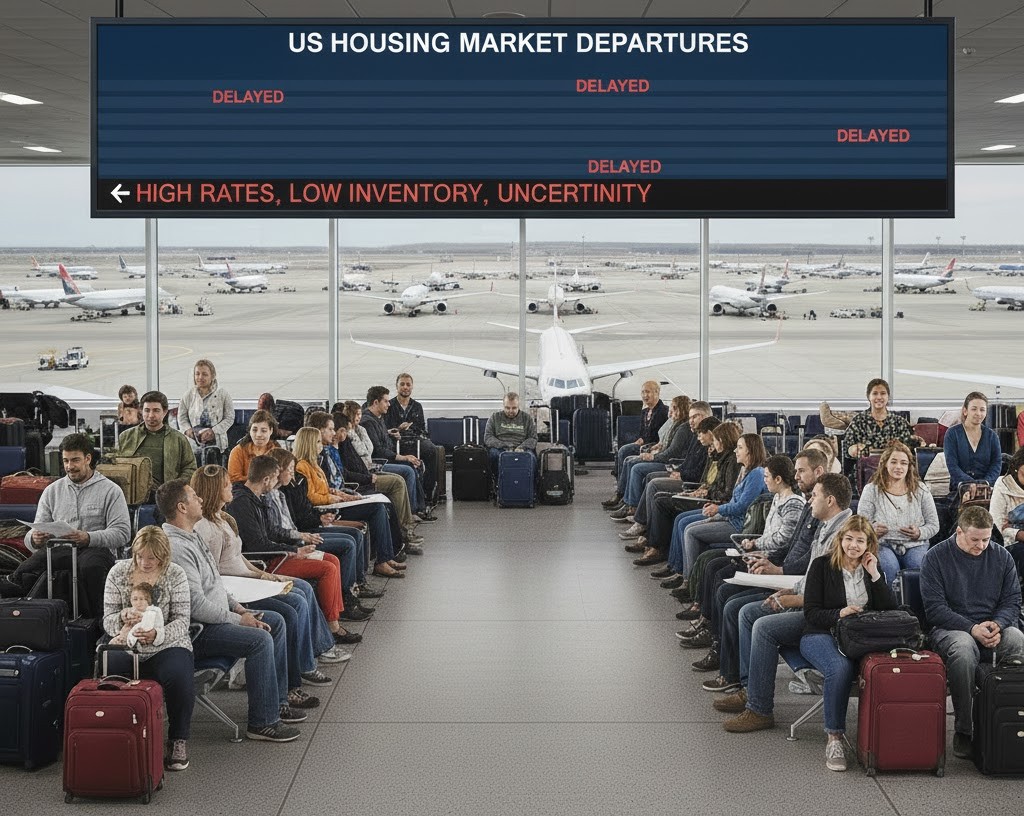
In a recent interview with Fox Business, Ryan Serhant declared that the U.S. housing market has shifted into what he calls a "nobody's market." He argues that right now, the familiar labels - "seller's market," "buyer's market," "balanced market" - no longer apply. Instead, buyers and sellers alike find themselves stuck in a difficult in-between.
"It's not the buyer's market, it's not a seller's market, it's actually nobody's market."- Ryan Serhant, Fox Business
Serhant explains that "rates are high and they're not coming down substantially anymore." The result? A market where neither buyers nor sellers have a clear advantage, and the traditional playbooks no longer work.
It's Not an Old Normal - It's No One's Normal
Serhant highlights America's biggest housing shift in 50 years. He observes that many wealthy Americans are forgoing the idea of owning just a single home. Instead, they're building portfolios of homes across multiple cities - buying not one, but sometimes two or three homes, as their lives and lifestyles evolve.
But he also warns of a deeper issue: a "silent affordability crisis." With wage growth failing to keep pace with rising costs - including housing and general living expenses - many people are relying more on debt to maintain their lifestyles. If mortgage rates remain elevated, this strain may become one of the most significant economic stories of our time.
"If there's a normal we're all looking for, it's not an old normal, and it's not even a new normal - it's potentially no one's normal, which just means somewhat unaffordable."- Ryan Serhant, Fox Business
What "Nobody's Market" Looks Like - On the Ground
High interest rates aren't going away soon.
With mortgage rates remaining elevated, many prospective buyers scale back or delay their plans - even if they're financially qualified. Meanwhile, homeowners locked into low-rate mortgages feel little incentive to sell, because moving would mean giving up a favorable rate.
Low inventory + selective demand = stagnation.
Homes aren't sitting empty on the market, but the flow of transactions has slowed. Supply is tight. On the demand side, many buyers feel priced out or are rethinking their timing. The result: a significant portion of would-be buyers and sellers end up waiting.
Pricing and negotiation become more situational.
In a classic seller's market, supply is low and demand high - favoring sellers. In a buyer's market, it's the opposite. But in "nobody's market," the advantage shifts not based on the typical supply-demand imbalance - but on strategy, timing, and individual motivation.
People rethink home - from a "once-and-done" to a "life-as-portfolio" approach.
As Serhant notes, some homeowners are acquiring multiple residences - for lifestyle flexibility, tax benefits, hybrid work, or investment purposes. This reflects a growing trend: homeownership is no longer necessarily about one forever-home.
Why This Matters to Homeowners - and What to Do Next
For many buyers and sellers - especially families, first-time homebuyers, or people downsizing - the uncertainty feels overwhelming. If the market doesn't clearly favor one side, how should you act?
Don't expect the "easy sale" or "bargain buy."
Sellers: don't count on a feeding frenzy. Buyers: don't bank on huge discounts.
Know your motivation and timeline.
If you're motivated - because of a job change, family needs, lifestyle shift - you can still make good moves. If you're flexible, waiting may make sense.
Prioritize positioning, not timing.
A strong marketing strategy, proper pricing, and readiness to act fast may matter more right now than the calendar or seasonal timing.
Consider flexibility in home ownership.
Given shifting patterns - work-from-home, remote/hybrid work, lifestyle rethinking - buying with flexibility in mind (resale potential, home office, multi-use spaces, second homes) may offer more long-term value than chasing "the perfect forever home."
How HeartLink Homes Helps in This Transitional Market
At HeartLink Homes, we believe that in uncertainty - that "nobody's market" zone - expert guidance, local market knowledge, and individualized strategy matter more than ever. Here's how we help:
We dig deep into your needs and goals.
Before showing you any homes, we ask the right questions: Are you looking for a forever home? A starter home? A flexible base for remote work? An investment property? This helps clarify what kind of property makes sense - beyond market noise.
We leverage hyper-local data across Pierce, King, Snohomish, Thurston, Kitsap, and Lewis counties.
National headlines may say "nobody's market," but real estate is local. We track micro-market trends: where inventory is tighter, where appreciation is holding, where mortgage-rate sensitivity is strongest - giving you a real advantage.
We build a strategic plan, not just showings.
Whether you're selling or buying (or both), we craft a thoughtful timeline, position pricing, and guide negotiation - making sure you move when the moment is right.
We support long-term thinking.
If you're open to flexibility - multiple homes, investment properties, or homes that evolve with you - we help you model those scenarios and make smart decisions for future flexibility.
The Bottom Line: In Uncertainty Lies Opportunity
The old playbooks - "price high and wait," or "watch for a crash" - aren't reliable anymore. The market isn't acting like a typical seller's market or buyer's market. As Serhant said: it's "nobody's market."
That doesn't mean nothing is happening. It means everything depends on preparation, clarity, and strategy.
If you're looking to buy or sell - or just want to explore your options - now may feel confusing. That's exactly when having experienced partners in your corner becomes most valuable.
With HeartLink Homes, you get that reliable, strategic guidance - helping you navigate the maze, avoid common pitfalls, and act confidently when the right opportunity arises.
